
Last updated November 24, 2026
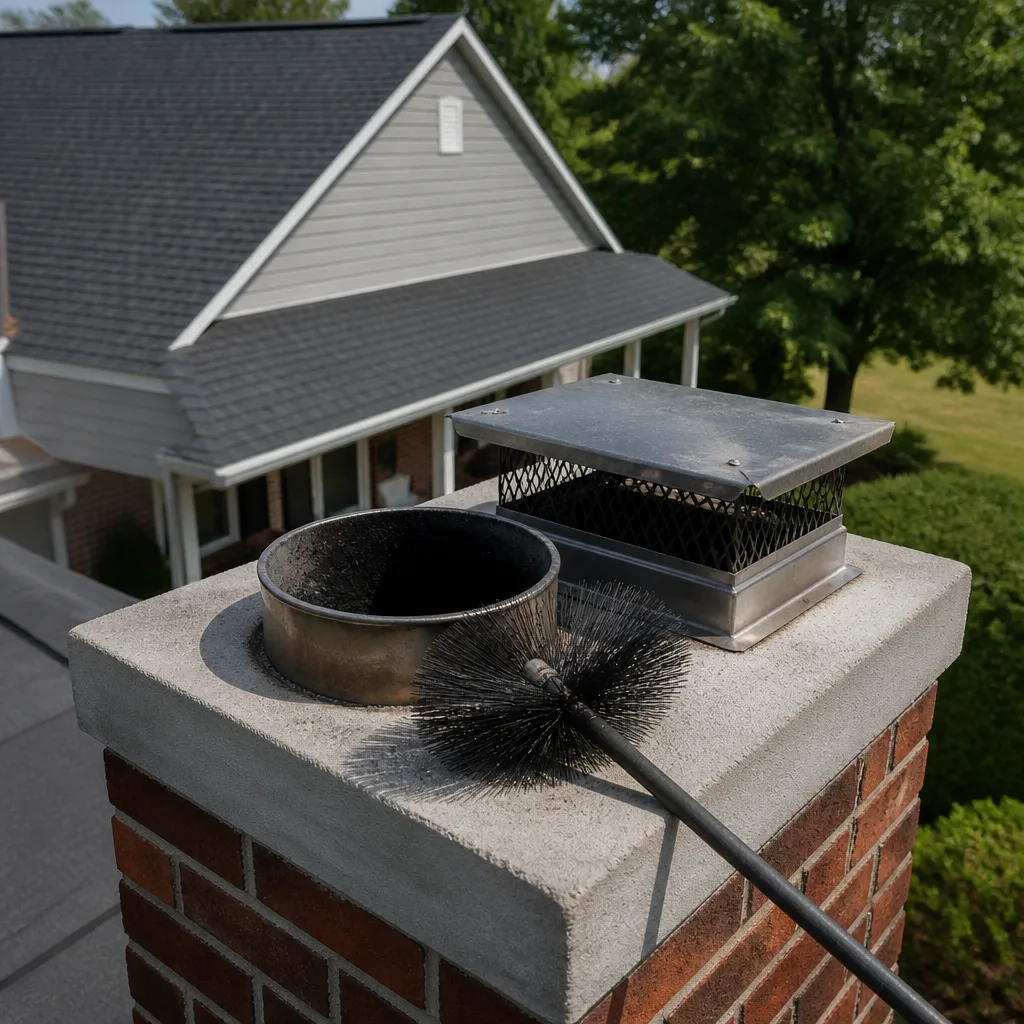 Sweep & inspection
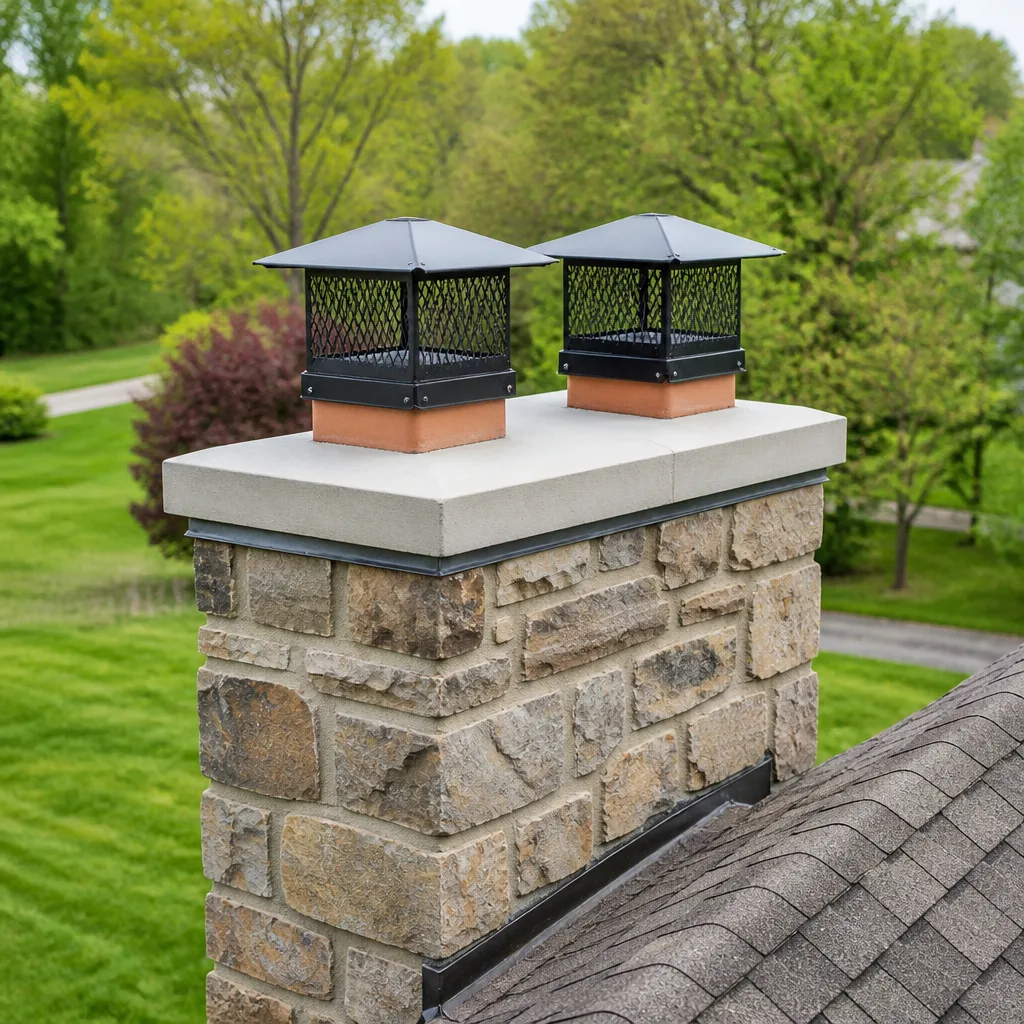 Caps & crowns
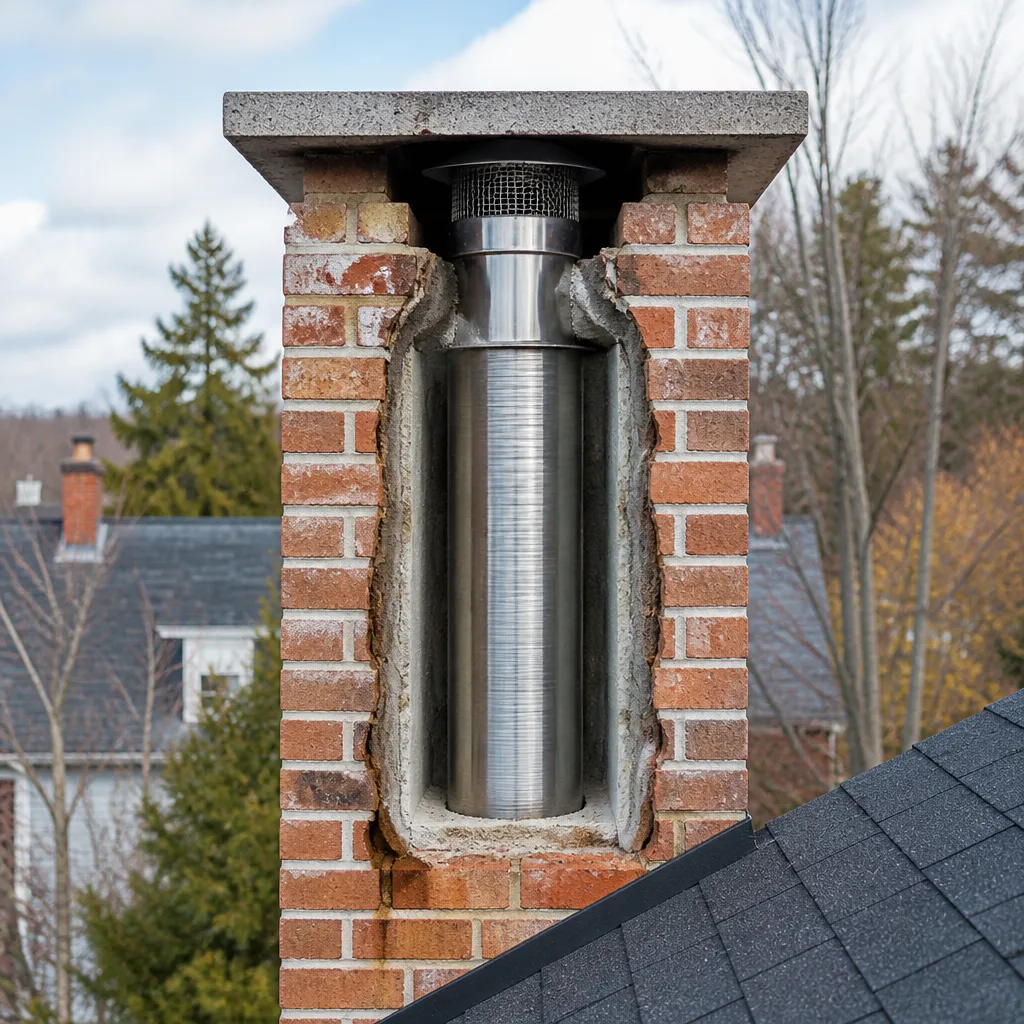 Flue relining
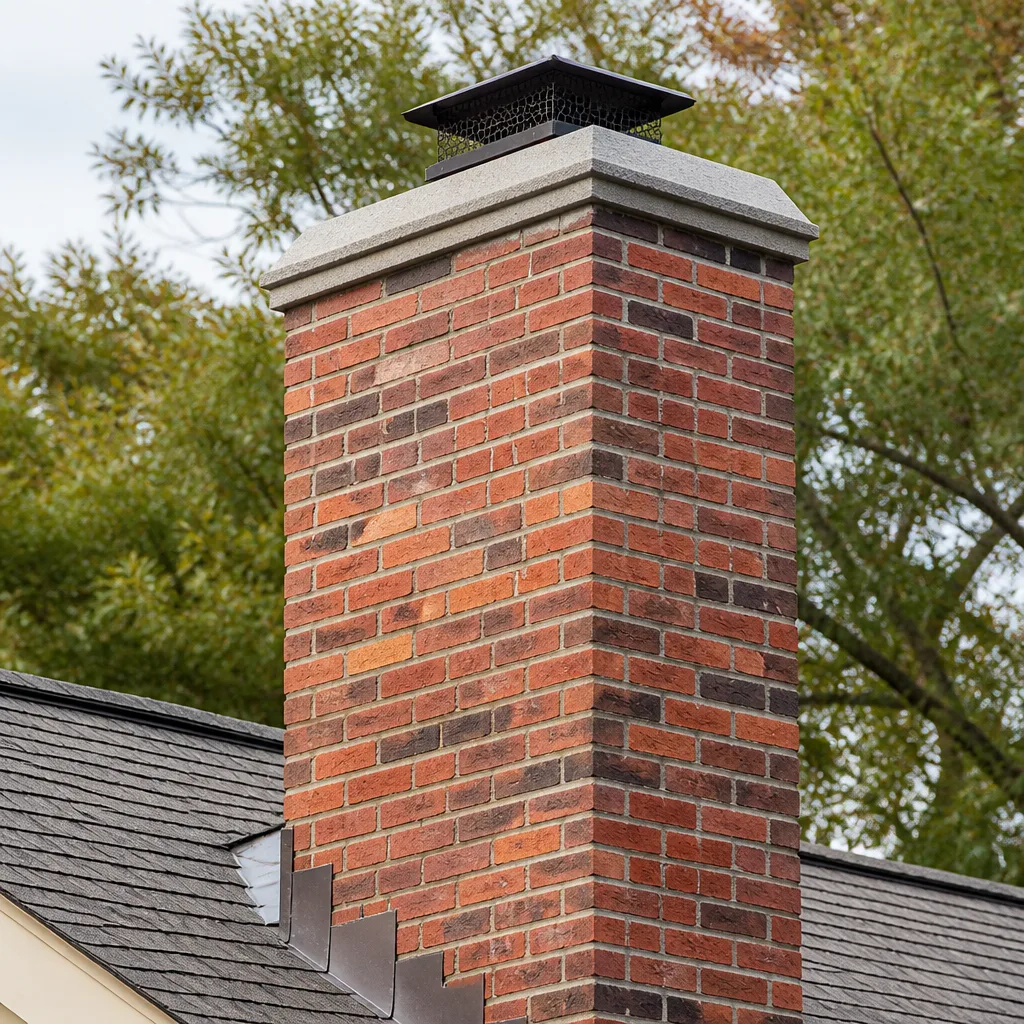 Masonry repair
 Gas fireplace service
Level 1 sweep and inspection to the NFPA 211 annual standard - flue, crown, cap, and flashing checked and photographed
Chimney sweep logs do not sweep chimneys. They loosen some creosote - which then falls where a brush and vacuum still have to collect it.
DIY vs Professional Chimney Cleaning: The Draper Homeowner’s Decision Guide
You can buy a chimney brush kit for about $60 and clean your own flue. That’s true. What’s also true is that a Stage 2 creosote buildup, a cracked tile liner, or a blocked rain cap can turn that $60 decision into an expensive one, and you won’t know any of those conditions exist until you’re already committed to the job. In Draper, where winters are cold enough that fireplaces run hard from November through March, those conditions build up faster than most homeowners expect. This guide walks through what DIY chimney brushing actually requires, when it’s a fair choice, when it’s false economy, and how to tell the difference before you spend the money.
Quick Answer
DIY chimney cleaning is reasonable only when your flue is straight and fully accessible, you’ve had a recent professional inspection confirm the liner is sound, and you burn dry, seasoned wood that keeps creosote in the early stages. For most Draper homes with inserts, older masonry chimneys, or no recent inspection on record, professional cleaning is the safer and often cheaper choice because it includes the camera inspection and documentation that DIY can’t provide.
Styles & brands we work with
- Sweep & inspection
- Caps & crowns
- Flue relining
- Masonry repair
- Gas fireplace service
Table of Contents
- What DIY Chimney Brushing Actually Requires
- The Two Conditions That Make DIY Reasonable
- Why Inserts Are Poor Candidates for DIY
- What You Miss Without a Camera Inspection
- The True Cost of DIY vs Professional
- How a Professional Sweep Actually Works
- Creosote Stages and Why Draper’s Climate Matters
- Common Mistakes to Avoid
- When to Call a Professional
What DIY Chimney Brushing Actually Requires
Most DIY chimney guides skip the part where you climb onto the roof. In practice, a proper brush cleaning from the top means getting safely onto a pitch that in many Draper neighborhoods slopes significantly, especially in the foothill areas along the east bench where homes sit on steeper lots. If you’re not comfortable on a roof, you’re already starting from behind. Cleaning from the bottom up through the firebox is possible for some flues but requires more physical work and creates a dust problem that’s hard to contain inside a finished room.
Here’s what the equipment list really looks like:
- A correctly sized brush matched to your flue’s interior dimensions. Too small and you leave creosote on the walls; too large and you can damage the liner tiles.
- Rods or a rope and weight system long enough to reach the full height of the flue, with enough flexibility to follow a straight run without jamming.
- Drop cloths and plastic sheeting sealed around the firebox opening, because soot and creosote dust will travel into the room the moment the brush contacts the walls.
- A respirator rated for fine particulates, not a paper dust mask. Creosote dust is a known irritant and you don’t want it in your lungs.
- Safety glasses, gloves, and non-slip footwear rated for roof work.
- A shop vacuum with a HEPA filter for cleanup, plus heavy bags for disposal.
Disposal is the part nobody mentions. Soot and creosote are messy and staining. You can’t just toss them in the kitchen trash and expect the can to survive the trip to the curb. Most homeowners bag the debris heavily, double-bag it, and take it straight to an outdoor bin. Plan for that. A professional chimney sweep in Draper arrives with contained vacuum equipment that keeps the mess out of your living room entirely.
The Two Conditions That Make DIY Reasonable
DIY chimney cleaning is a fair choice under exactly two conditions, and both need to be true at the same time. If either one is missing, the math tips toward a professional service.
Condition one: a straight, accessible flue. A straight flue with no offsets, no sharp bends, and an unobstructed top can be brushed from either the roof or the firebox with the right equipment. If your chimney has an offset or a bend to route around framing, a brush on a flexible rod will not reliably reach every surface, and the parts you can’t reach are exactly the parts that accumulate creosote. Ask a professional during inspection whether your flue is a straight run or has an offset, and write it down. That single piece of information determines whether DIY is even on the table.
Condition two: a confirmed clean bill of health from a recent professional inspection. This is the one most homeowners skip. You need a professional to have looked at your liner, mortar joints, cap, crown, and any appliance connections within the last year and said the system is sound. Without that, you’re brushing blind. A brush passing over a cracked tile or a deteriorated mortar joint doesn’t fix the problem and doesn’t tell you it’s there. It just loosens debris into an opening you can’t see. A professional chimney repair assessment catches those defects before they turn into water intrusion or worse.
If both conditions hold, and you’re comfortable on the roof, and you’re burning seasoned wood, then a DIY brush cleaning between professional inspections is a reasonable maintenance habit. If any of that is uncertain, book the inspection first. That’s the whole decision.
Why Inserts Are Poor Candidates for DIY
Wood-burning inserts and freestanding stoves have a specific problem for DIY cleaning: the appliance blocks access to the chimney. To properly clean the flue and the connector pipe, the insert typically has to be pulled out from the firebox. That’s not a brush job. It’s a mechanical job with real risk of damaging the surround, the hearth, and the gaskets that seal the appliance to the flue.
Here’s what a professional sweep has to handle on an insert service that a homeowner generally cannot:
- Removing the insert without cracking the surround panels or shifting the hearth pad. Seals and fasteners can be seized after years of heat cycling.
- Inspecting and cleaning the connector pipe, the short flue section between the stove outlet and the chimney. This is where a surprising amount of creosote accumulates and where a brush alone can’t reach.
- Checking gasket integrity on the insert door and the flue collar. A failed gasket lets smoke and carbon monoxide leak into the room. You can’t test a gasket reliably with a visual glance.
- Re-sealing and re-installing the insert to its original clearance and alignment.
If you’re not sure whether your insert was installed with proper clearances or whether the connector pipe is accessible, that’s not something to figure out by feel. In our experience, the majority of insert-related chimney problems we see in Draper trace back to a connector pipe someone didn’t know to clean or a gasket that failed quietly. Both of those need an inspection, not a brush.
What You Miss Without a Camera Inspection
This is the core of the DIY-versus-professional argument. A brush cleans the interior of the flue. A camera looks at the interior. Those are not the same task, and only one of them tells you the condition of the system. Video inspection sends a camera down the flue and shows, on a screen you can watch, what’s actually happening inside your chimney.
Three categories of problems live exclusively in the camera view:
- Liner cracks and gaps. A hairline crack in a clay tile liner is invisible from the top or the bottom. On camera, it’s obvious. That crack can let heat and combustion gases reach the surrounding framing or masonry, which is exactly what the liner exists to prevent.
- Mortar joint deterioration. Mortar between clay tiles erodes over time, especially in a freeze-thaw climate like Draper’s. Missing mortar joints weaken the liner’s structural integrity and open pathways for gases.
- Obstructions and blockages. Nests, fallen tiles, and even a collapsed section of liner can sit well above the firebox and below the cap. A visual check from either end won’t find them. A camera does.
There’s also a documentation benefit. When we perform an inspection, you get a photo report of what the camera saw, before and after. If a problem is found, you have a record. If everything is fine, you have that record too. That’s how an independent chimney specialist earns trust: by showing the work, not just describing it. DIY cleaning gives you none of that evidence. You’re trusting your memory and your eyesight from a few feet away.
The True Cost of DIY vs Professional
Here’s where the math gets interesting. The brush kit is cheap. The full cost of DIY chimney cleaning, honestly calculated, is not. And a professional cleaning bundles in documentation and inspection that DIY cannot replace, regardless of how many times you do it yourself.
Typical cost ranges for Draper-area homeowners look something like this. These are estimated ranges, and your written estimate from any provider sets the final price.
| Cost Item | Typical Range | Notes |
|---|---|---|
| DIY brush kit + rods | $60 – $180 | One-time, but you’ll need the right size for your flue |
| Respirator, safety gear, drop cloths | $40 – $90 | Not optional; fine soot and creosote dust are a real health concern |
| HEPA shop vacuum rental or purchase | $50 – $150 | If you don’t already own one, the mess indoors is significant |
| Your time (2-4 hours minimum, plus cleanup) | Your own labor | Best-case if everything works; a jammed brush or a leaky drop cloth doubles it |
| Professional sweep in Draper | $150 – $350 | Includes cleaning and usually a visual inspection |
| Professional sweep + camera inspection + photo report | $250 – $450 | Documentation you can act on and keep |
| Cost of a missed problem (cracked liner, blocked cap, failed gasket) | Varies widely by repair | Discovering it late is where DIY stops saving money |
Notice the last line. That’s the risk adjustment most DIY cost calculators leave out. A problem that a camera inspection would have caught in year one can become a repair in year three. The liner crack you didn’t see because you were brushing, not inspecting, doesn’t heal. It gets worse. That’s the false economy.
We’re not going to tell you a brush kit is a dumb purchase. It’s not. For a straight, accessible flue with a recent inspection on file, a between-visit brushing is reasonable upkeep. But if you’re choosing between a $60 kit and a $250 professional service to avoid paying for the inspection, you’re not saving money. You’re deferring a smaller cost to take on a bigger risk.
How a Professional Sweep Actually Works
A professional chimney sweep service is not just a bigger brush. It’s a sequence designed to clean the flue and confirm its condition at the same time. Here’s the general shape of what a Draper cleaning includes, so you know what you’re paying for.
- Pre-cleaning inspection. Before any brush goes in, we look at the firebox, the damper, the firebox-to-flue transition, the cap, and the crown. Any obvious problem gets noted and, if serious, the cleaning pauses so we can talk about it.
- Setup and containment. Drop cloths and a sealed vacuum system go in around the firebox. The goal is zero soot in your living room, and that requires equipment and technique, not just a tarp.
- Brushing the flue. The correct brush size for your flue, run top-to-bottom or bottom-to-top depending on the flue’s configuration.
- Vacuuming and cleaning the firebox and smoke shelf. The smoke shelf behind the damper is a notorious creosote catch that most DIY cleanings miss entirely.
- Camera inspection. The flue is inspected with a video camera, and the photo report is provided to you. Any defects are documented.
- Cap, crown, and exterior check. The cap on top of your chimney is where water gets in and where animals build nests. A failed cap or a cracked crown is the most common source of water intrusion we see. If we spot one, we can install a replacement cap from professional product lines like Gelco or Famco, or repair the crown, in the same scope of work.
That last point matters more than it sounds. When a sweep finds a failed cap or a deteriorated crown, the homeowner usually has to book a second company to fix it. We handle the diagnosis and the repair, so the work doesn’t get handed off to a subcontractor mid-project. And if the camera finds a liner problem that doesn’t need a full replacement, we install HeatShield, a ceramic resurfacing system that extends the liner’s life without full relining. That’s a capability generalist sweep companies typically don’t have.
Creosote Stages and Why Draper’s Climate Matters
Creosote is the residue left behind when wood smoke cools inside the flue. It builds up in recognizable stages, and the stage determines how hard the cleaning is and how much risk the buildup carries.
- Stage 1: soot and light flaky creosote. Brushable. Comes off easily with routine cleaning. This is where a well-maintained flue should sit.
- Stage 2: hardened, crusty creosote. Denser and harder to remove. A standard brush may not fully clean it. Stage 2 buildup is where a professional cleaning with the right tools becomes worth the cost.
- Stage 3: glazed, glassy creosote. The most stubborn and the most hazardous. Standard brushes don’t touch it; the flue has to be treated more carefully. Stage 3 buildup is a reason to stop using the fireplace until it’s addressed.
Draper’s climate matters here. Winters along the Wasatch Front are cold enough that a working fireplace runs daily for months, but the shoulder seasons and dry spells mean many households burn in bursts: a fire one weekend, nothing for a week, a fire again. That pattern, combined with unseasoned or damp wood, is a creosote factory. Wet wood burns cool, sends more unburned material up the flue, and lays down buildup faster than dry seasoned wood. We’re not saying every Draper homeowner has a Stage 2 problem waiting. But the seasonal rhythm here does put more creosote in more flues than you’d guess from the outside.
The takeaway for the DIY question is simple. You cannot tell what stage of creosote is on your flue walls by looking up at it with a flashlight. A professional brush run is how you find out, and where Stage 2 or Stage 3 is found, it’s how the problem actually gets resolved. That’s why a routine annual inspection is the baseline, whether or not you intend to brush in between.
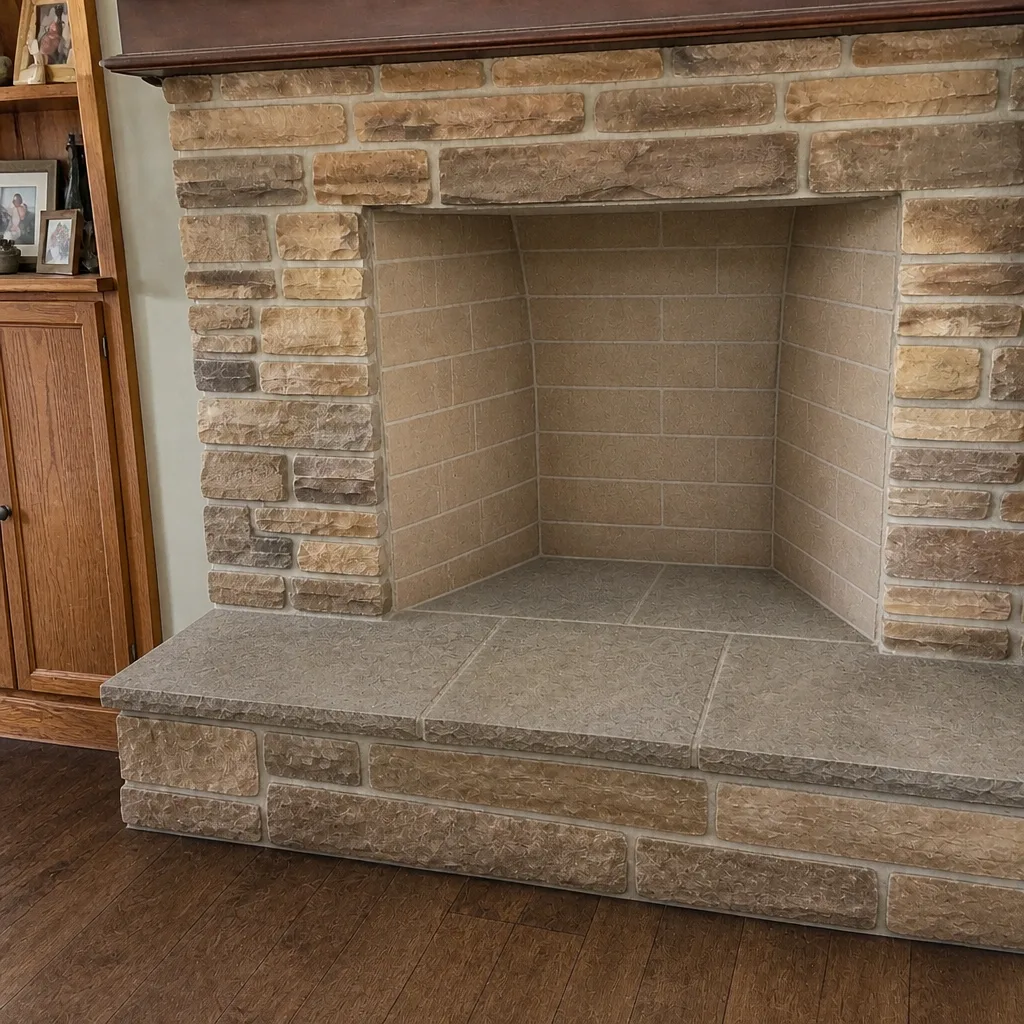
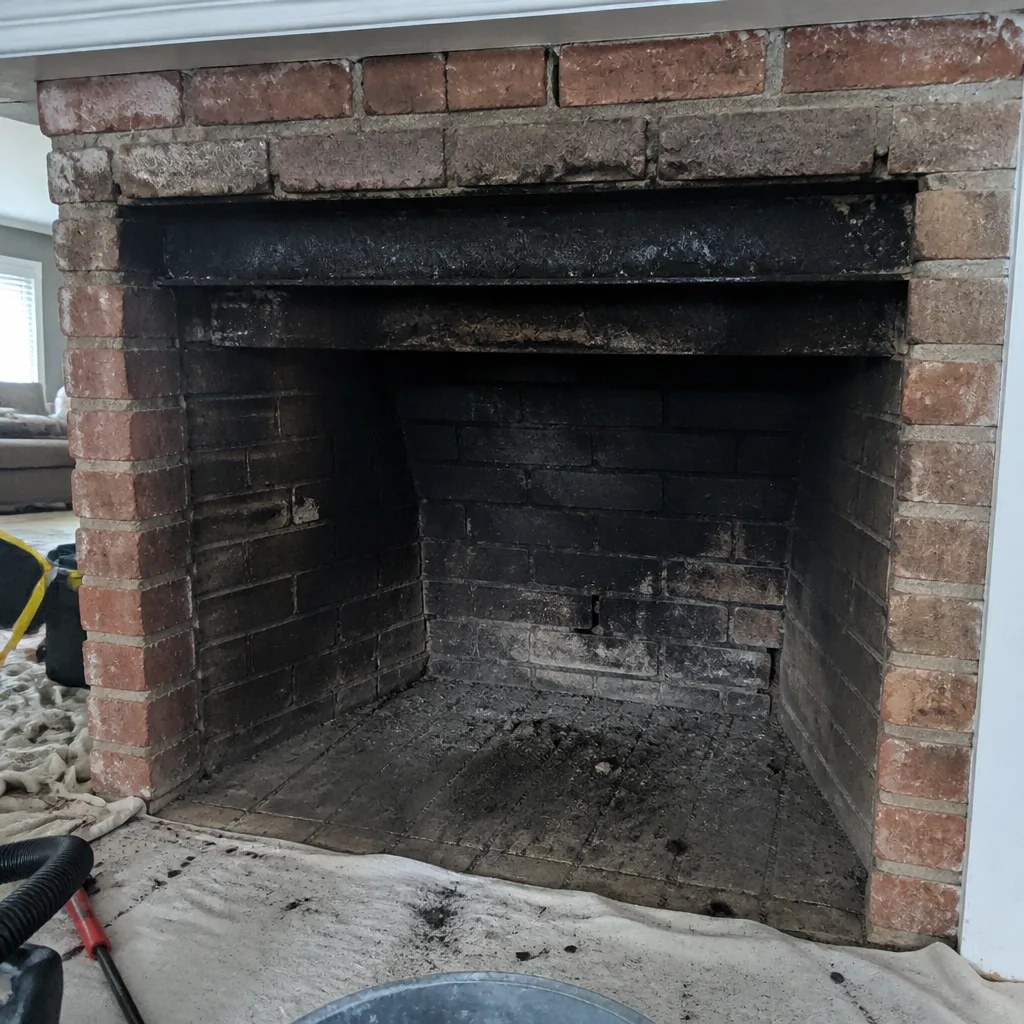
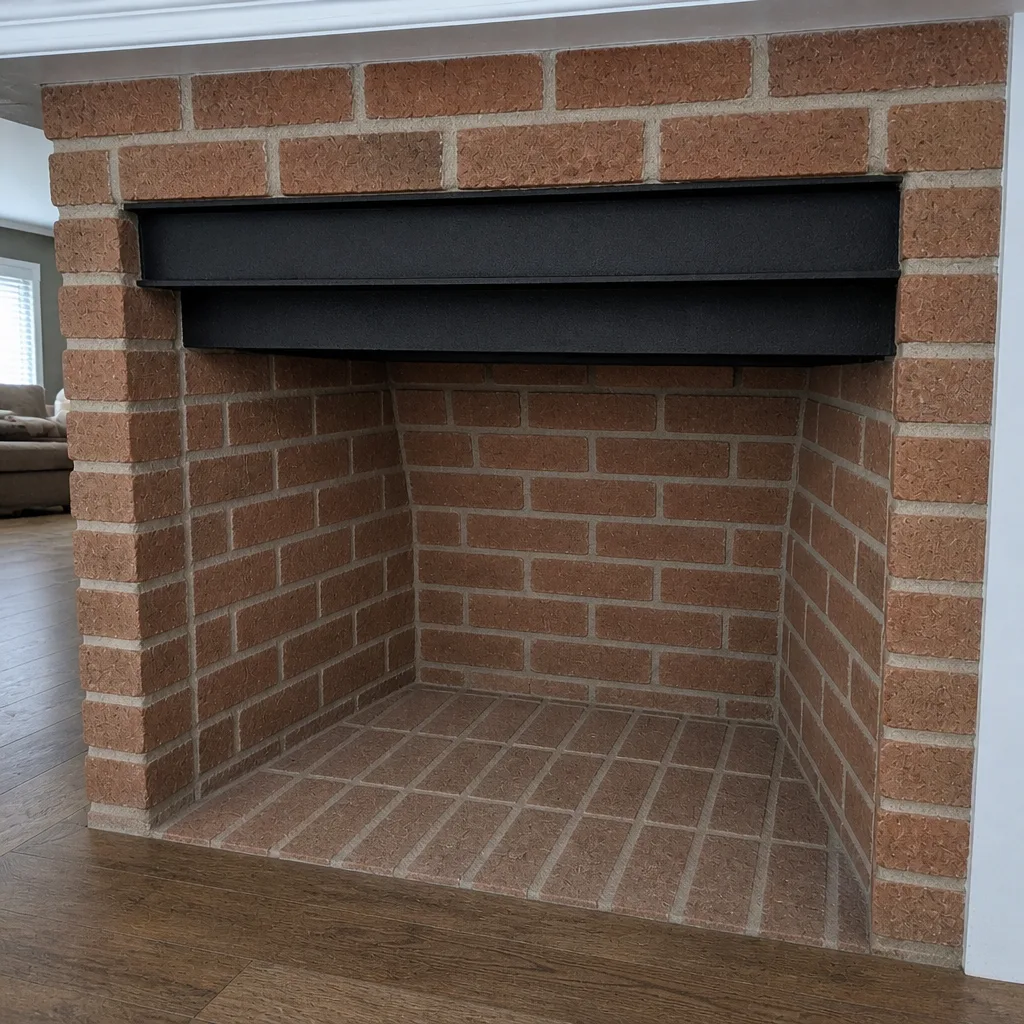
See the difference
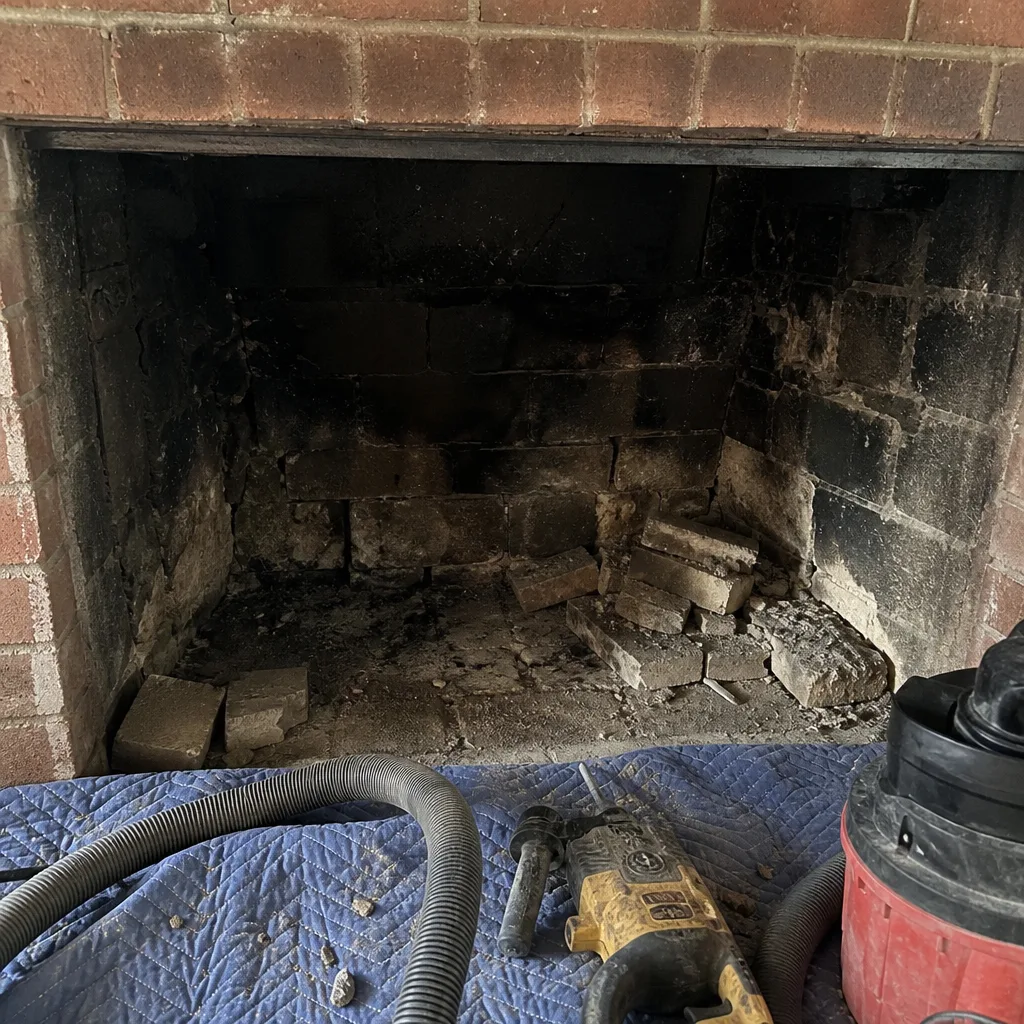 Before
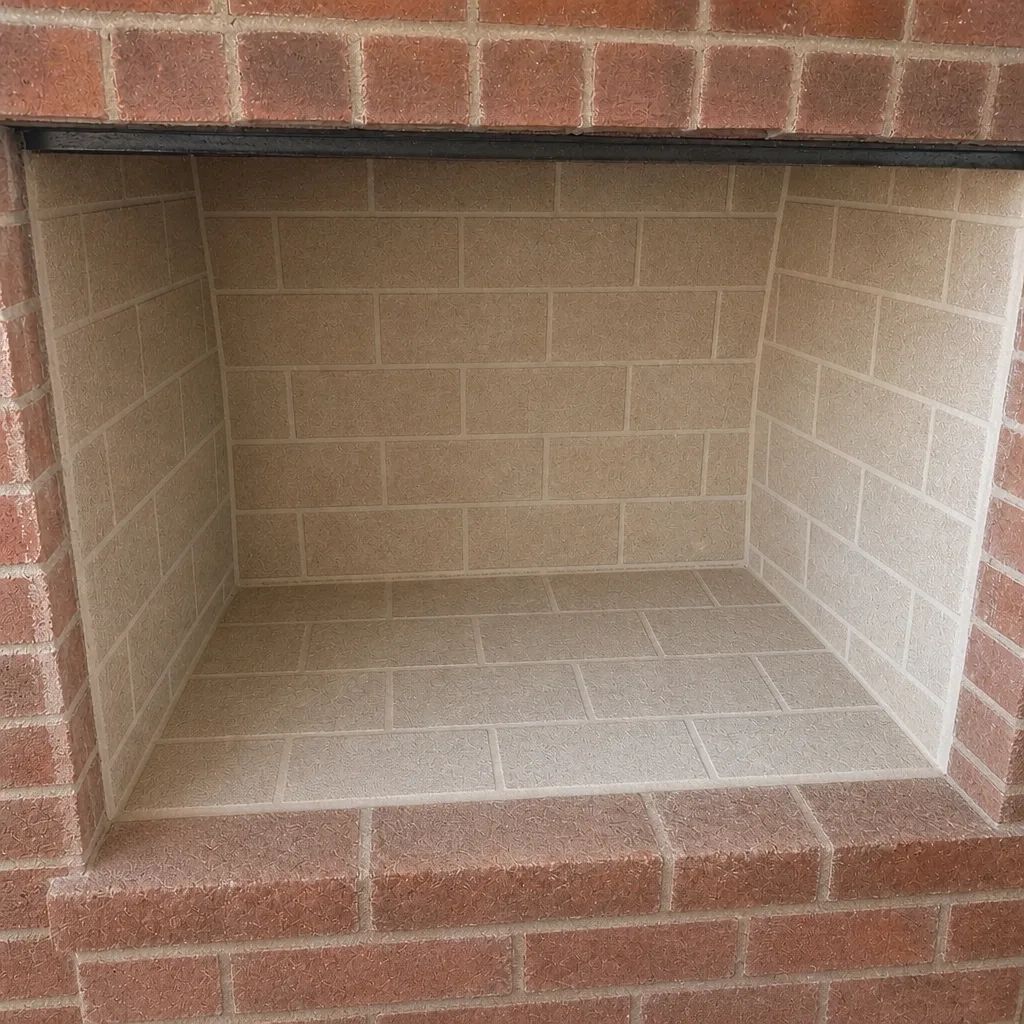 After
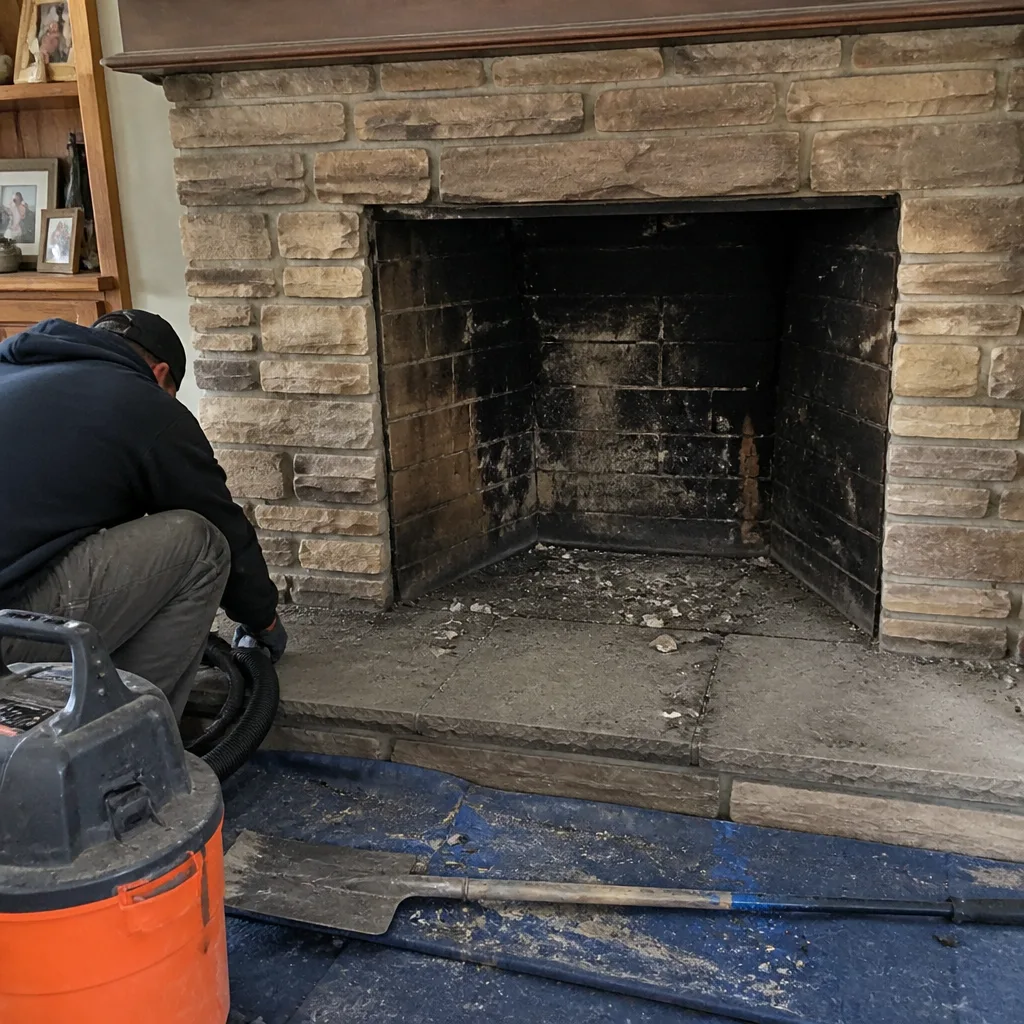 Before
 After
 Before
 After
Common Mistakes to Avoid
- Brushing without knowing your flue’s interior size. The wrong brush size either leaves creosote behind or damages the liner tiles. Always get the interior dimensions from an inspection first.
- Cleaning from the firebox without sealing the room. Draper homes with open-plan living spaces get a fine soot layer across every surface within minutes if you don’t contain the dust. Containment is the hard part of the job, not the brushing.
- Skipping the smoke shelf and the damper. The area behind the damper is a creosote trap that a top-down brush pass never reaches. Most DIY cleanings miss this entirely.
- Pulling an insert or stove to clean behind it without knowing what’s holding it. Removing the appliance can damage the surround, the hearth, and the gaskets that keep combustion gases out of your home.
- Ignoring the cap and crown because they’re outside the flue. In Draper’s freeze-thaw winters, a hairline crack in the crown opens up and water gets into the masonry. A missing or damaged cap lets in rain and animals. Neither will get noticed during a flue-only cleaning.
- Burning green or damp wood to stretch the season. It sends more creosote up the flue, and it makes every subsequent cleaning harder. Seasoned wood is the cheapest chimney insurance there is.
- Treating a brush kit as a substitute for inspection. A clean flue and a sound flue are not the same thing. The brush cleans; only a camera tells you whether what’s behind the soot is intact.
When to Call a Professional
Call a professional chimney sweep in Draper when any of the following applies to your home:
- You can’t find a record of the last inspection, or it’s been more than a year.
- You have a wood-burning insert or freestanding stove.
- Your flue has an offset or a bend.
- You notice smoke backing into the room, a stronger smell than usual, or difficulty getting a draft started.
- You’re buying or selling a home and need an objective condition report for the transaction.
- You haven’t had a camera inspection since you moved in.
Any one of these is a signal that a professional look is worth the cost of the visit. Draper Chimney Sweep offers free estimates in Draper. Call (855) 658-4373. We answer 24/7. Fast dispatch from 7am to 7pm, Sunday through Friday.
Frequently Asked Questions
A professional chimney cleaning in Draper typically runs $150 to $350 for a standard masonry chimney, and $250 to $450 when it includes a camera inspection and photo report. Those are estimated ranges; the written estimate sets the final price. Many homes combine the cleaning with a standalone inspection because the photo report is useful to keep. Call (855) 658-4373 for an exact quote. Estimates are free.
Yes, if you haven’t had one in the last year. A brush cleans the flue; a camera shows whether the liner, mortar joints, and interior are sound. Those are separate tasks. The photo report from an inspection is the only way to know whether the flue you’re cleaning is safe to keep using, and it’s the record you’d want if a problem arises later. Call (855) 658-4373 to schedule a standalone inspection. Estimates are free.
Once a year for most households that burn regularly, and more often if you burn heavily through the winter. Draper’s cold season means fireplaces run consistently for several months, which builds creosote faster than occasional use. An annual sweep plus inspection is the standard cadence. If you’re unsure when yours was last serviced, that alone is a reason to call. Call (855) 658-4373. We answer 24/7.
Creosote accumulates in layers, and at Stage 2 and Stage 3 it becomes hard to remove and genuinely hazardous. A blocked flue or a cracked liner can let combustion gases, including carbon monoxide, reach the inside of your home instead of venting outside. Skipping maintenance doesn’t create an instant emergency, but it does make the eventual cleaning harder and the repair more expensive. Call (855) 658-4373 to book a sweep and inspection. Estimates are free.
Generally no. Inserts typically need to be pulled out to reach and clean the connector pipe, and removal risks the surround, the hearth, and the door gaskets that keep smoke and carbon monoxide out of the room. A professional service handles the pull-out and re-install safely and inspects the gaskets while the appliance is out. If your insert hasn’t been serviced recently, book it. Call (855) 658-4373.
A cracked liner is usually fixable, and the right fix depends on the extent of the damage. Modern liner systems like DuraFlex are installed when a full relining is warranted. For a liner that’s deteriorated but still serviceable, HeatShield ceramic resurfacing can extend its life without a full replacement. Either way, you’ll see the camera evidence and get a written estimate before any work is authorized. Call (855) 658-4373 to book the inspection. Estimates are free.
The Bottom Line
DIY chimney cleaning isn’t a bad idea in every case, but it’s a narrower option than most guides suggest. It’s a fair choice only when your flue is straight and accessible, a recent professional inspection has confirmed the liner and mortar are sound, and you’re comfortable on the roof. For inserts, offset flues, older masonry chimneys, and any home without a current inspection on record, professional cleaning wins on both safety and cost. The professional service includes the camera inspection and the documentation the DIY route can’t replicate. If you want the truth about your chimney’s condition, that’s the piece worth paying for. Then, if you want to brush between visits, you’ll at least know what you’re brushing.
Draper Chimney Sweep handles chimney sweep, chimney repair, fireplace repair, chimney inspection, and chimney cap and crown services across Draper. One call covers cleaning, inspection, and repair. The local pro is licensed and insured as their state requires. Our technicians have up to 11 years of experience. Call (855) 658-4373 for a free estimate. We answer 24/7. Fast dispatch from 7am to 7pm, Sunday through Friday.
Written by the team at Draper Chimney Sweep.